
CAPABILITIES
Laser cutting, CNC folding/press brake, welding, and fabrication—built around clear specs, consistent processes, and practical production support.We provide fibre laser cutting, CNC folding, welding, fabrication and secondary operations to turn flat sheet into finished parts and assemblies.
This capabilities page outlines the equipment capacity, typical tolerances, materials, finishing options, and delivery/packing approach based on our current shop setup—so you can confirm fit, function, and quote requirements before you send files.
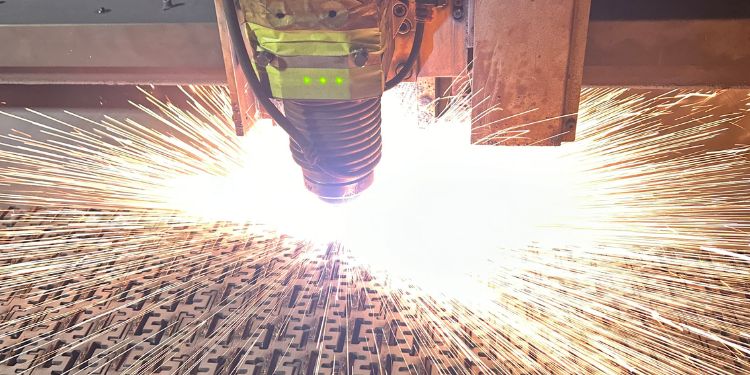
Laser Cutting
Our fibre laser cutting capability supports sheets up to 6000 mm × 2000 mm and is suited to brackets, plates, panels, and precision cut-outs where repeatable fit matters. Laser power is 12 kW, with assist gases available including nitrogen, oxygen, and air.
Capacity:
Maximum thickness is mild steel up to 25 mm, stainless steel up to 25 mm, and aluminium up to 16 mm. Galvanised is up to 3 mm, but confirmed at time of enquiry.
Accuracy
Typical cut tolerance is listed as ± 0.2 mm with repeatability ± 0.3 mm. Minimum hole guidance is noted as: “under 3mm thick 1mm Hole / ≥4mm = 1/4 material thickness.” If you have critical tolerances or tight feature requirements, include them clearly on the drawing so they can be reviewed during quoting.
Finishing options:
Deburring/edge clean-up and brushed/linished finishes are available, and part etching, marking/ID upon request.
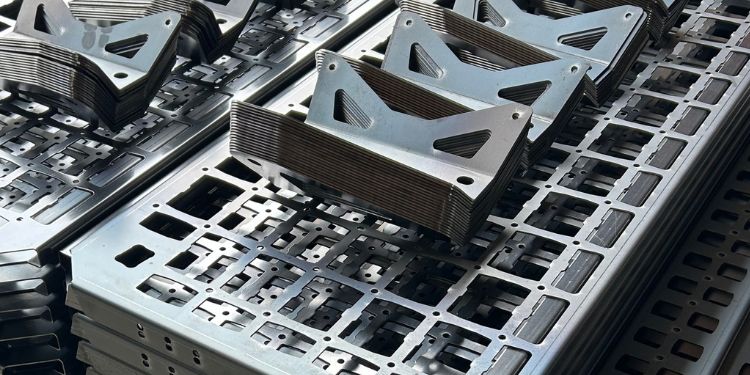
CNC Folding/Press Brake
Our press brake capacity is 130 tonne with a 3000 mm maximum bend length and CNC backgauge (Axes: 6+1). The tooling set is Amada - promecam style tooling with 8mm V – 100mm V plus knife and radius top tools, and crowning/compensation.
Forming Details
Minimum flange is 7 mm outside with 8mm V. Typical internal radius is 0.8 mm, with radius tooling 5mm/10mm/20mm. Typical angle tolerance is ± 0.5°.
Bending Capacity:
A thickness-by-length chart was not entered in the checklist; the note states: “Sent as Standard list — Exceptions to material may be required at time of Enquiry.” For accurate quoting, include bend details and any critical formed dimensions.
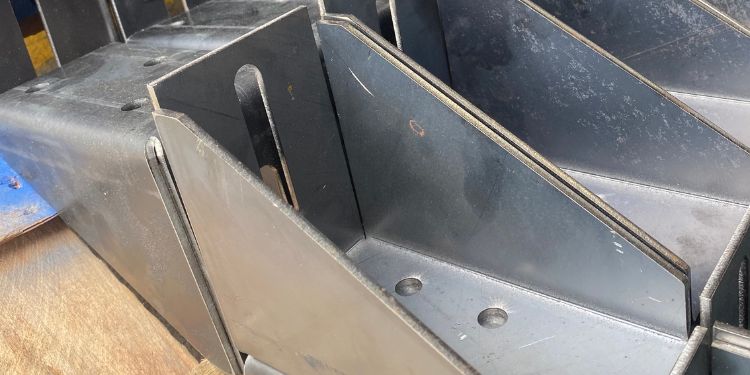
Welding
Welding processes include MIG (GMAW), TIG (GTAW), Stick (SMAW), and Spot welding. Materials welded are mild steel, stainless steel, and aluminium.
Thickness Ranges:
- Mild Steel: 0.9 mm to 32 mm
- Stainless Steel: 0.9 mm to 20 mm
- Aluminium: 1 mm to 20 mm
Weld Types:
- Fillet
- Butt
- Stitch / Intermittent
- Continuous
- Weld patters to drawings / specs
Quality & Compliance
- Qualified & certified welders
- NDT avalailable (MPI/Dye Pen/UT
- Fabrication & Assembly
- Secondary Operations
- Materials & Grades
- Finishing
- Quality & Packing
- Quoting & File Formats
Complete fabrication capability is provided in-house, including laser cutting, folding, and welding, enabling efficient production from flat material through to finished assemblies. Hardware insertion services are also available, including rivnuts, PEM fasteners, and threaded inserts, allowing components to be delivered fully prepared for installation or final assembly.
Assemblies can be produced up to 3000 mm (L) × 2000 mm (W) × 1500 mm (H) with handling capacity of up to 1500 kg. The workshop is equipped with forklift handling and additional lifting methods where required to safely manage larger or heavier assemblies.
A range of secondary operations are available to deliver production-ready parts and assemblies, including:
-
Deburring and edge rounding
-
Drilling up to 10 mm diameter
-
Tapping from M3 to M20
-
Countersinking and counterboring
-
Grinding and linishing for surface finishing
-
Part marking, labelling, and component identification
These processes allow parts to move directly from fabrication into assembly or installation without the need for additional processing.
A range of commonly used metals and grades are regularly processed, including:
Mild Steel
- Grades 250 and 350
- Structural grades compliant with AS1594 and AS3678
Stainless Steel
- 304 and 316
- 3CR12 / 4003
Aluminium
- 5005 (most commonly used)
Material test certificates (MTC/MTR) and batch or heat traceability can be supplied on request to support project documentation and quality requirements.
A range of finishing options are available through trusted specialist partners, allowing components to be delivered ready for installation or final use. Finishing services include:
-
Powder coating
-
Galvanising
-
Anodising
-
Electroplating and zinc plating
Finishing is coordinated as part of the production process to ensure quality and consistent lead times.
Quality assurance processes ensure that all fabricated parts are checked prior to dispatch. Inspection equipment includes calipers, micrometers, height gauges, and surface plates, allowing accurate verification of dimensions and specifications. First article or sample approvals can also be provided where required.
Parts are carefully packed to protect components during transport, using methods such as edge protection, bubble or foam wrap, palletising, and crating. Heat-shrink packaging is also available where required.
Both customer pickup and delivery services are available. Freight can be arranged via courier, local delivery, freight carriers, or customer-nominated transport providers.
Quotes can be prepared from a range of file formats including:
-
DXF
-
DWG
-
STEP
-
PDF drawings
Sketches or concept drawings can also be used to begin the quoting process where formal drawings are not yet available.
Providing key details such as material grade, thickness, tolerances, quantities, and finishing requirements helps ensure accurate pricing and efficient production planning.
Ready to get manufacturing?
Upload your drawings and we’ll confirm material, quantities and lead time.